Labour pipelines are increasingly shaping how serious employers approach overseas workforce planning. Rather than treating recruitment as a series of isolated transactions, employers are beginning to view workforce supply as a continuous system that must be designed, maintained, and strengthened over time.
This shift reflects hard operational reality. Labour shortages in many markets are no longer temporary disruptions. They are structural conditions. Employers who rely solely on reactive recruitment are finding themselves perpetually exposed to instability, delays, and escalating costs.
From long-term experience working with international clients, the difference between employers who build pipelines and those who do not is immediately visible in project continuity, workforce stability, and commercial resilience.

Why One-Off Hiring Models Are No Longer Sustainable
One-off hiring is inherently reactive. Employers recruit when vacancies arise, often under time pressure. Recruitment partners are asked to deliver quickly, and decision-making prioritises speed over suitability.
While this model can function when labour supply is abundant, it becomes dangerously fragile when markets tighten. When talent is scarce, employers who have no established pipeline are forced to compete aggressively for limited resources. They accept lower-quality candidates, incur higher costs, and experience greater turnover.
The unpredictability of this approach undermines operational planning. Project timelines become dependent on external labour market volatility rather than internal workforce strategy. Employers who have experienced repeated disruption are increasingly abandoning one-off hiring in favour of structured pipeline development.
How Labour Pipelines Improve Workforce Predictability
Predictability is one of the most valuable assets in project-based industries. Employers who build labour pipelines gain visibility into future workforce availability rather than relying on hope and urgency.
A functional pipeline typically involves ongoing engagement with recruitment partners, continuous identification of potential candidates, and alignment between future project needs and current workforce development. Rather than waiting until labour is urgently required, employers maintain a pool of prepared workers who can be mobilised when needed.
This approach significantly reduces last-minute recruitment pressure. It allows better alignment between workforce capability and project timelines. Over time, employers develop greater control over one of the most volatile elements of their operations.
The Relationship Between Pipelines and Workforce Quality
Labour pipelines are not only about quantity. They are strongly linked to workforce quality. When recruitment is continuous rather than episodic, there is greater opportunity to refine selection criteria, improve preparation processes, and develop deeper understanding of what profiles perform best in specific roles.
Employers working within pipeline models often collaborate closely with their recruitment partners on training, screening, and skills development. Candidates can be identified early, prepared gradually, and assessed more thoroughly. This produces stronger outcomes than rushed selection under urgent conditions.
Over time, pipeline-based recruitment tends to produce more consistent workforce performance, lower mismatch rates, and stronger retention.
Why Labour Pipelines Reduce Commercial Risk
Workforce instability is a commercial risk. Delays in mobilisation can jeopardise contracts. Inability to scale operations quickly can limit growth opportunities. Frequent turnover can damage reputation and client confidence.
Employers who invest in labour pipelines are effectively mitigating these risks. They reduce their dependence on unpredictable market conditions. They increase their ability to respond quickly to new opportunities. They demonstrate to clients that workforce availability is under control rather than speculative.
In competitive markets, this resilience becomes a differentiator. Employers who can confidently commit to delivery timelines because their workforce pipeline is secure are more attractive partners than those relying on ad-hoc recruitment.
Vietnam’s Strategic Value in Pipeline Development
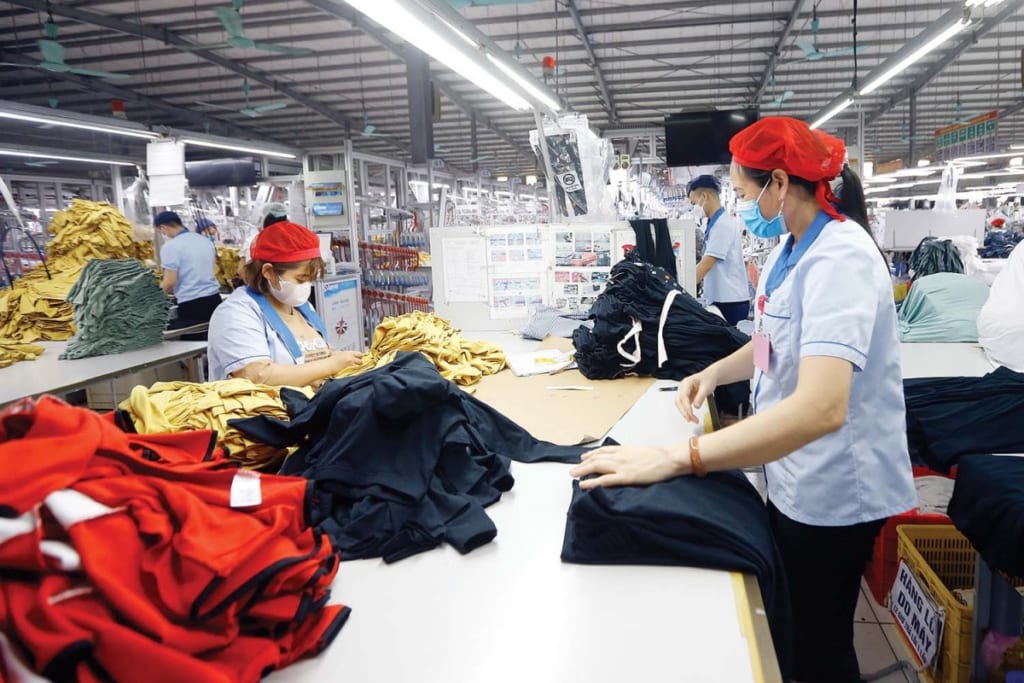
Vietnam’s labour market lends itself well to pipeline-based deployment models. The country has a large working-age population, growing vocational training infrastructure, and increasing experience in overseas employment across diverse sectors.
For employers seeking to build long-term labour pipelines, Vietnam offers the advantage of continuity. Workers can be identified, trained, and prepared over time. Recruitment partners can develop structured candidate pools aligned with specific employer requirements.
Many international employers who source from Vietnam have already begun to move in this direction. Rather than issuing isolated job orders, they collaborate with agencies to develop ongoing recruitment programmes that support predictable, repeatable deployment.
This approach reflects maturity in both employer strategy and recruitment practice.
How Pipeline Thinking Changes the Role of Recruitment Partners
The emergence of labour pipelines fundamentally changes the role of recruitment partners. Agencies are no longer expected merely to respond to vacancies. They are expected to contribute to workforce planning.
This includes:
-
Understanding the employer’s long-term project roadmap
-
Anticipating future skills requirements
-
Supporting early candidate identification
-
Contributing to training and preparation design
-
Maintaining ongoing candidate engagement
Agencies capable of operating in this strategic capacity are becoming increasingly valuable. Those that remain focused solely on short-term placement are finding themselves less aligned with employer needs.
Pipeline models reward professionalism, planning capability, and long-term thinking rather than speed alone.
The Operational Discipline Required to Maintain Labour Pipelines
Building pipelines is not simply a conceptual shift. It requires operational discipline. Employers and recruitment partners must commit to ongoing communication, data sharing, and process refinement.
Successful pipeline models often involve:
-
Regular workforce forecasting discussions
-
Shared performance feedback on deployed workers
-
Continuous adjustment of candidate profiles
-
Structured tracking of potential candidates
-
Long-term relationship management
Without this discipline, pipeline initiatives become superficial. Employers who approach pipeline development seriously, however, tend to see compounding benefits over time.
Why Labour Pipelines Support Employer Reputation
Employers known for stable workforce planning and predictable mobilisation gain a reputational advantage. Clients view them as reliable. Workers view them as serious employers. Recruitment partners view them as long-term collaborators.
This reputation has tangible commercial value. It attracts better candidates. It strengthens bargaining power with partners. It enhances credibility in competitive tenders.
Pipeline-driven employers are not merely better organised. They are perceived as more professional. In labour-intensive industries, perception of workforce stability is closely linked to overall corporate credibility.
The Strategic Implications for Employers Sourcing Overseas Labour
For employers operating in labour-constrained environments, labour pipelines are increasingly becoming a necessity rather than an option. The question is no longer whether to build pipelines, but how effectively they can be designed and maintained.
Those who continue to rely on one-off hiring are likely to experience growing volatility as labour markets tighten further. Those who invest early in pipeline development are positioning themselves for greater resilience, stronger performance, and better long-term competitiveness.
Vietnam’s labour market offers strong potential to support this shift. Employers who recognise this opportunity and align their strategy accordingly are likely to gain a meaningful advantage in the coming years.